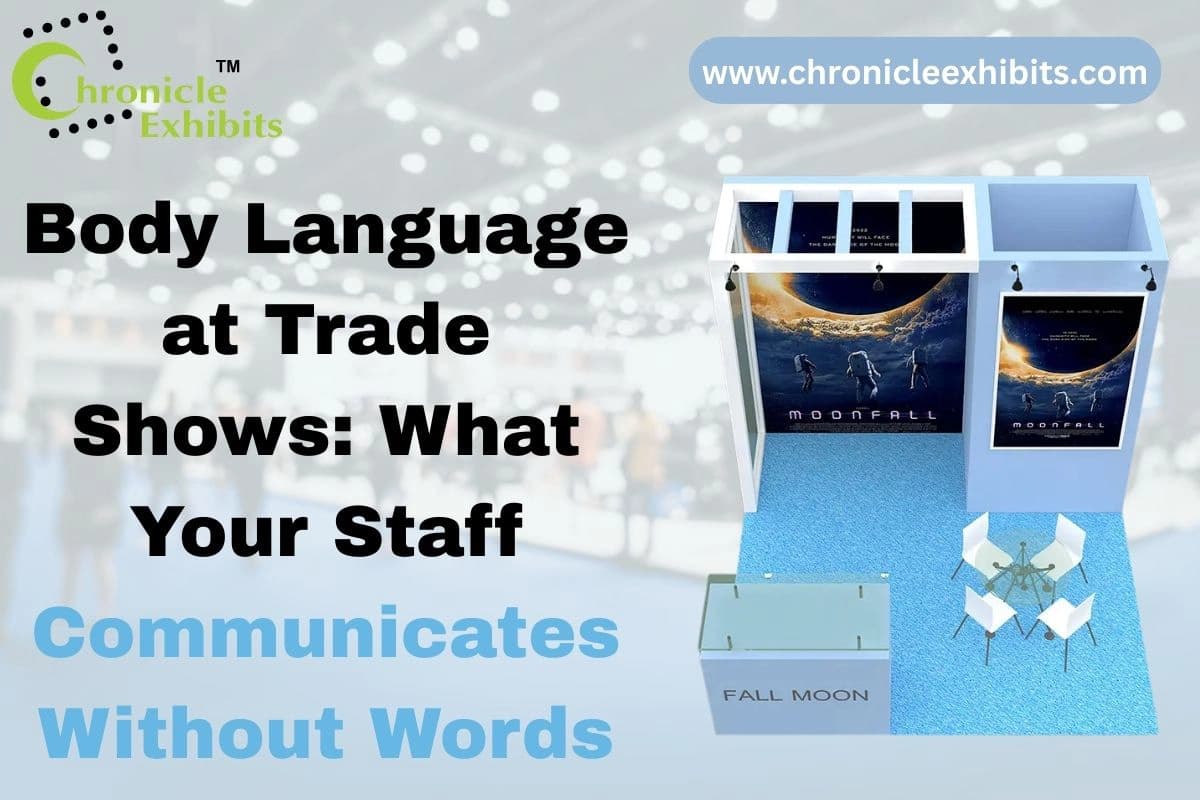
Your booth staff is your brand’s face in a trade show. They are the brand ambassadors and the sales funnel for your booth. Before any visitor reads your signage, checks out your demo, or hears your pitch, they already judge your brand based on your booth staff's body language. In an era when attendees make the stop-or-walk decision within a few seconds, nonverbal communication is an essential tool for exhibitor engagement that is often overlooked. In this blog, we will learn more about how this engagement tool influences perception at trade shows, common mistakes staff make, and how to train your team to communicate without saying a word. So without any further delay, let's get started.
Trade show attendees have multiple options. They instantly scan the custom trade show booth, quickly deciding where to stop and who to approach. Even the most persuasive product pitch can't overcome negative nonverbal cues. Conversely, positive body language can ignite conversations that scripts alone can't. Body language functions as a silent filter, guiding their decisions:
Attendees typically decide whether to approach in under five seconds, during which they subconsciously assess:
A staff member who appears distracted, bored, or uncomfortable may unintentionally signal “I don’t want to talk,” “This booth isn’t important,” and “You’re interrupting me.” On the other hand, confident and approachable body language invites curiosity and trust.
An open posture signals accessibility and confidence. When you are in the booth, stand upright with your shoulders relaxed. Keep your arms uncrossed and angle your body toward the aisle. Keep your hands visible and relaxed
Avoid:
Eye contact is a highly effective engagement tool. Your team should aim for brief, friendly eye contact paired with a smile. Avoid looking down at your phone, laptop, or notes, as this signals disengagement and may turn off potential leads. Effective eye contact helps in:
Movement shows whether you have energy. Standing rather than sitting, moving naturally, and stepping forward slightly when greeting people all send positive signals. Slouching, pacing, or fidgeting with your badge, phone, or pen can send the wrong message. Moving with purpose shows confidence and that you’re ready to engage.
Find proven trade show booth ideas from an experienced brand, Chronicle Exhibits LLC. can elevate your exhibit strategy with designs and insights trusted by global brands.
When someone stops at your booth, body language matters even more.
Leaning Toward the Attendee: Leaning forward slightly shows you are interested and engaged. But getting too close can make people uncomfortable. Demonstrate attentiveness while always respecting personal space.
Mirroring: Gently copying an attendee’s posture or gestures can help build a connection without them even noticing. Keep it natural and avoid making it obvious.
Nodding and Facial Feedback: Nodding and showing facial reactions signal that you are listening. If you look blank or distracted, attendees may feel ignored or unimportant.
Even experienced staff can make unintentional mistakes, which can send the wrong signals to attendees. Here are some examples of bad body language that should be avoided:
Using Phone
Using phones or tablets excessively during the event, unless you are providing a demo, can make you appear uninterested, unprofessional, and poorly prioritized. Your personal gadgets should be out of sight during active booth hours.
Booth Clustering
If your staff are standing in a group and talking among themselves, attendees may feel they are interrupting a private conversation. To avoid this, it’s important to space staff evenly and remain outward-facing.
Sitting
Sitting staff may appear less approachable and less energetic. If a sit-down is necessary, rise immediately when someone approaches the booth to greet them.
Unwelcoming Facial Expressions
Unintentional frowning, blank expressions, or looking tired can drive attendees away. Tradeshows are demanding and can make you feel tired, but facial expressions are critical in deciding
Trade shows attract international attendees, so it’s important to train your staff to observe and adapt rather than relying on rigid behavior. Body language cues can vary across cultures, including eyecontact, personal space, and gestures, which may have different meanings. When in doubt, use respectful, neutral body language.
To get the best results at trade shows, train your booth staff well. Their body language should look natural, not rehearsed. To train your team effectively:
At busy trade shows, your products and messages might be similar to others, but your booth staff can stand out. Body language acts as a silent brand ambassador, showing professionalism, confidence, and credibility before anyone speaks. When your team understands nonverbal communication, your booth feels more welcoming, conversations are better, and leads are stronger. Sometimes, what your staff doesn’t say matters most.
If you need trade show booth rentals, Chronicle Exhibits LLC has over 500 customizable options and can handle all your exhibit needs.